Oil Drilling Chemical is a broad term for the specialized substances used in drilling fluids. It does not describe one product. Instead, it includes additives that help control viscosity, density, filtration, lubrication, and shale stability. These chemicals support safer and more efficient drilling through complex underground formations.
In the field, drilling fluid moves through the drill pipe and returns with rock cuttings. At the surface, shaker screens remove larger fragments. The cleaned fluid then returns to the mud tanks. A carefully selected Oil Drilling Chemical can keep cuttings suspended, reduce friction, or limit fluid loss into porous rock. Some additives also help maintain pressure and protect equipment from excessive wear. Small changes matter.
No formula is perfect.
Performance depends on temperature, pressure, salinity, formation type, and water chemistry. Engineers usually combine laboratory testing with real-time monitoring before changing a treatment program. They may check density, rheology, filtration volume, and chemical compatibility during each drilling stage. Safety data sheets and recognized industry standards also guide handling and evaluation. These controls make decisions more traceable and reliable.
However, field conditions can challenge even well-designed systems. A fluid that performs well in one basin may create problems elsewhere. This is why experienced teams review test results instead of trusting assumptions. The following discussion explains how these chemicals work, where they are applied, and why responsible selection requires technical judgment, documented testing, and continuous observation.
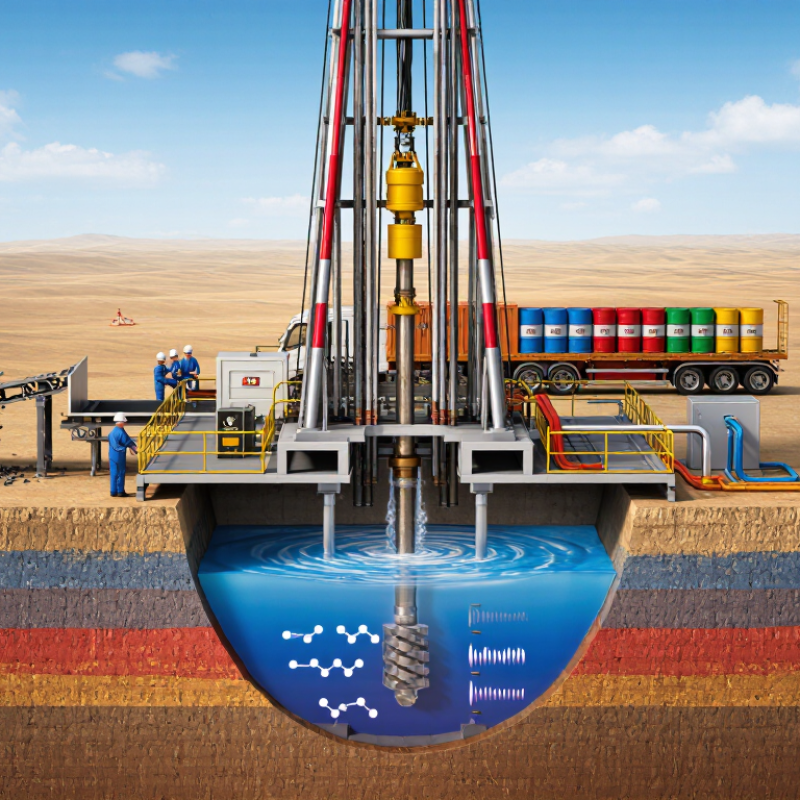
Oil drilling chemical is not one single substance. It describes a group of engineered additives used in drilling fluids, cement systems, and wellbore treatments. These chemicals help control viscosity, density, filtration, shale swelling, corrosion, and lost circulation. In a mud tank, the effect can be visible. A fluid may become thicker, smoother, or easier to pump after a small dosage change.
A drilling fluid must carry rock cuttings to the surface while protecting the formation. Weighting materials increase density and help control underground pressure. Polymers improve flow behavior and reduce fluid loss.
Inhibitors limit clay hydration, which can destabilize the wellbore. The American Petroleum Institute’s API Spec 13A provides testing requirements for key weighting materials. Field engineers still adjust formulas according to temperature, pressure, salinity, and rock type.
Demand for reliable drilling performance remains significant. The International Energy Agency’s Oil 2024 report projects global oil demand to reach about 105.4 million barrels per day by 2030. That scale increases the need for efficient chemical systems, but efficiency is not automatic.
A formulation that works in a cool, low-salinity well may fail in a hot, reactive shale section. Laboratory results can also look better than field performance. Real wells are less tidy. Careful sampling, dosage control, waste management, and continuous monitoring remain essential.
Oil drilling chemicals are engineered additives used in drilling fluids, cement systems, and well-completion fluids. Their main purpose is practical: control pressure, carry rock cuttings, cool the bit, and protect the wellbore. The International Energy Agency’s Oil 2024 report projects global oil demand will approach 105.4 million barrels per day by 2030. That scale keeps drilling-fluid performance commercially important.
The main types include viscosifiers, fluid-loss additives, shale inhibitors, lubricants, weighting agents, and biocides. Viscosifiers help suspend cuttings when circulation slows. Fluid-loss additives form a thin filter cake against porous rock. Shale inhibitors reduce clay swelling, which can destabilize the hole. Weighting agents increase fluid density and help control formation pressure. Lubricants reduce torque along long horizontal sections. Biocides limit microbial growth in water-based systems.
Cement additives form another important group. Accelerators shorten setting time, while retarders extend placement time in hot formations. Dispersants improve cement flow, and lost-circulation materials help seal fractures.
The American Petroleum Institute’s drilling-fluid standards emphasize testing density, rheology, filtration, and chemical compatibility. Field measurements matter more than a laboratory label. They can disagree.
The Society of Petroleum Engineers reports that extended-reach wells often face severe torque, pressure, and hole-cleaning challenges. Chemical selection must therefore match temperature, salinity, geology, and disposal requirements. A treatment that works in one basin may fail elsewhere. That is an uncomfortable, but necessary, limitation.
Oil drilling chemicals are specialized additives mixed into drilling fluid before it enters the well. Underground, they do not act as one substance. Each chemical changes a measurable property, such as density, viscosity, filtration, or lubrication. As pumps push the fluid down the drill pipe, it returns through the narrow space around the pipe. This circulation carries rock cuttings toward the surface.
Weighting materials increase fluid density and help balance formation pressure. Viscosifiers thicken the fluid, allowing it to suspend cuttings when circulation slows. Filtration-control agents form a thin, low-permeability cake along the borehole wall. This barrier limits fluid loss into porous rock. In reactive shale, inhibitors reduce water uptake and help prevent swelling or sloughing. Small changes matter.
Lubricants reduce friction between the drill string, rock, and casing. Surfactants can improve wetting and help disperse unwanted solids. Engineers adjust these chemicals after testing temperature, salinity, pressure, and rock samples. A fluid that works at the surface may behave differently several kilometers below it. Field measurements guide corrections, but predictions remain imperfect. Over-treatment can damage formation permeability or complicate waste handling, so dosage requires disciplined monitoring.
Oil drilling chemicals are practical tools used throughout well construction. During surface drilling, water-based mud cools the bit, carries rock cuttings upward, and stabilizes the open hole. Weighting agents increase density and help control formation pressure. Viscosifiers keep cuttings suspended when pumps stop. Filtration-control additives reduce fluid loss into porous rock.
The formula changes with depth. A shale interval may need stronger inhibition, while a depleted zone requires lower-density fluid. According to the U.S. Environmental Protection Agency’s 2016 Hydraulic Fracturing Study, horizontal wells used roughly 2.4–9.7 million gallons of water during development. That figure mainly reflects completion activity, not routine drilling. Still, it shows why chemical selection and fluid recovery matter. The same study identified 1,084 chemicals in reported hydraulic-fracturing fluids and additives. Drilling systems usually use fewer products, but their functions overlap.
Field engineers test density, viscosity, filtration, salinity, and corrosion behavior before changing the mud system. The IOGP Environmental Performance Indicators report emphasizes tracking chemical use, waste, and discharges by activity. Operators therefore inspect tanks, label transfer lines, and monitor returns continuously. Small leaks matter. A missed connection can contaminate soil and distort the mud balance. Laboratory results also need field judgment; ideal measurements can fail under vibration, heat, or sudden pressure changes. No recipe works everywhere. That assumption is too neat.
Drilling chemicals are additives used to control drilling-fluid properties, stabilize the wellbore, carry rock cuttings, reduce fluid loss, lubricate the drill string, and support cementing and completion operations.
The chart shows common chemical functions used during major well-construction stages. A value of 1 means the function is commonly applied during that stage; 0 means it is not normally a primary function. Actual programs vary with formation pressure, temperature, rock type, well geometry, and environmental requirements.
Oil drilling chemicals help control pressure, friction, corrosion, and rock stability during drilling. Water-based mud carries rock cuttings to the surface. Other additives reduce equipment wear or prevent fluid loss into porous formations. Their usefulness is clear. Their risks deserve equal attention.
Workers can face skin burns, respiratory irritation, or toxic exposure while mixing concentrated additives. Closed transfer systems, chemical inventories, updated safety data sheets, and suitable gloves reduce these risks. A ruptured hose can spread fluid across a steel rig floor within minutes. Small leaks still matter. Poor labeling and rushed maintenance remain practical weaknesses, even in well-managed operations.
Environmental risks include spills, contaminated wastewater, drilling waste, methane releases, and groundwater pathways. The US Environmental Protection Agency’s Hydraulic Fracturing Study identified conditions that can allow chemicals or wastewater to affect drinking-water resources. The International Energy Agency’s Global Methane Tracker 2024 estimated nearly 120 million tonnes of methane emissions from fossil-fuel operations in 2023. Methane is not a drilling additive, but poor well control and venting can intensify the footprint. Treatment systems must monitor salinity, metals, hydrocarbons, and chemical residues before disposal or reuse. No model captures every local failure. Field inspections and transparent reporting remain essential.
Oil drilling chemicals are engineered additives used in drilling fluids, cement systems, and well treatments. They are not one single substance. They control viscosity, density, filtration, corrosion, and shale swelling.
They help carry rock cuttings to the surface and stabilize the wellbore. Some also cool the drill bit and control underground pressure. Small dosage changes can make fluid thicker or smoother.
Common types include viscosifiers, fluid-loss additives, shale inhibitors, lubricants, weighting agents, and biocides. Each performs a different task. Their functions may overlap.
Weighting agents increase drilling-fluid density. This helps balance formation pressure and reduce the risk of uncontrolled fluid movement. Too much density can create another problem: lost circulation.
Shale inhibitors reduce clay hydration and swelling. This can prevent the wellbore from weakening or collapsing. A formula suitable for one shale section may fail in another.
Accelerators shorten cement setting time. Retarders extend placement time in hot formations. Dispersants improve cement flow, while sealing materials help close fractures.
Engineers check density, viscosity, filtration, salinity, and corrosion behavior. They also inspect tanks and transfer lines. Continuous monitoring can reveal leaks or sudden fluid changes.
No. Laboratory results can look excellent but fail under heat, vibration, salinity, or pressure changes. Real wells are less tidy. Field judgment remains necessary.
Operators should track chemical use, fluid returns, waste, and discharges. Containers need clear labels and careful handling. Small leaks can contaminate soil and disturb the mud balance.
Oil Drilling Chemical refers to a group of specialized substances used to support the drilling, construction, and maintenance of oil and gas wells. These chemicals may include drilling fluid additives, viscosity controllers, filtration reducers, lubricants, shale stabilizers, corrosion inhibitors, and cementing materials. Each type is selected according to underground conditions, such as temperature, pressure, rock structure, and formation fluids. Together, they help transport rock cuttings to the surface, control well pressure, stabilize the borehole, reduce friction, and protect drilling equipment.
During well construction, drilling chemicals are mixed into carefully designed fluid systems and adjusted as drilling conditions change. They can improve hole cleaning, prevent fluid loss, strengthen well walls, and support reliable cement placement. However, safe handling is essential because improper storage, spills, or unsuitable chemical selection may create risks for workers, groundwater, soil, and surrounding ecosystems. Effective management therefore requires accurate testing, protective equipment, controlled disposal, and compliance with applicable safety and environmental standards throughout the drilling process.

Oubo Chemical